Post Summer Skin Renewal: IPL, Thulium, and CO₂

As summer winds down, aesthetic practices have an opportunity to help patients revisit their skin goals. The conversation can begin with a useful question: What does my patient’s skin need, and when is the right time to treat it?
Interest in improving skin quality remains substantial. In the American Society for Dermatologic Surgery’s 2025 consumer survey, 78% of respondents reported being bothered by skin texture and/or discoloration. For providers, that reinforces the value of educating patients about both tone and texture, not simply offering the same treatment for every concern.
A thoughtful post summer skin treatment plan should connect the patient’s concerns with an appropriate technology, realistic recovery expectations, and a schedule that supports proper preparation and follow-up.
Why Fall Is a Useful Time to Plan IPL and Laser Treatments
For patients whose outdoor activities decrease after summer, fall can offer a practical opportunity to plan treatments that require careful sun protection. However, changing seasons does not automatically mean the skin is ready.
Recent tanning and sunburn are important considerations before laser and light-based procedures. The American Academy of Dermatology warns that treating tanned or sunburned skin with lasers can cause burns or unwanted discoloration. The American Society for Dermatologic Surgery also advises avoiding sunbathing and tanning beds before IPL treatment.
Before scheduling, providers should review the patient’s current skin condition, medical history, medications, recent sun exposure, and expectations. Treatment planning should also account for the patient’s ability to follow preparation and aftercare instructions.
Fall is a planning opportunity, not a substitute for evaluating treatment readiness.
An early consultation can establish the plan even when the procedure itself needs to wait.
Not Every Brown Spot Needs the Same Treatment
“Sun damage” is a broad description, not a diagnosis. Patients may use the same phrase to describe concerns that require different approaches.
Melasma, for example, requires individualized management that considers skin tone, pigmentation depth, and potential triggers. Treatment often includes sun protection and topical medication; laser or light procedures may be added for selected patients rather than used as a stand alone solution.
A spot that is growing, bleeding, or changing also deserves medical evaluation, not an automatic recommendation for cosmetic treatment. A dermatologist can determine whether it represents a cosmetic concern or something requiring a different type of care.
The starting point for post summer pigmentation treatment should therefore be understanding what is being treated before deciding how to treat it.
Choosing Between IPL, Thulium, and Fractional CO₂
Allegra IPL: Addressing Suitable Pigment and Vascular Concerns
Intense pulsed light, or IPL, is a non-ablative light-based treatment. In appropriately selected patients, IPL can improve the appearance of sun spots. Laser and light treatments can also play a role in managing certain visible blood vessels and redness associated with rosacea, alongside other elements of the patient’s treatment plan.
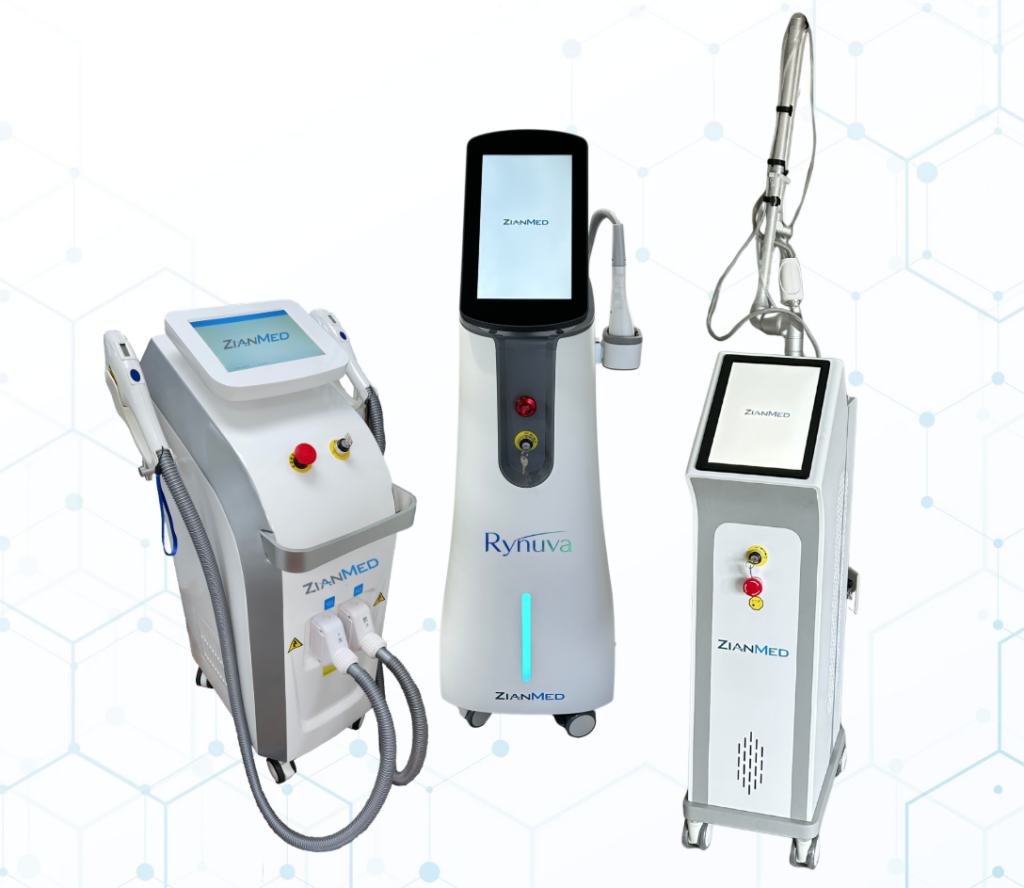
ZianMed’s Allegra IPL provides skin rejuvenation and vascular treatment options, along with hair removal and acne modalities. This versatility gives practices several ways to build services around different patient concerns rather than relying on a single-purpose treatment menu.
For a fall consultation, the discussion might focus on whether the patient’s primary concern is suitable pigmentation, visible vascular changes, or another condition requiring a different approach.
Although IPL generally involves limited recovery, “non-ablative” should not be presented as “no possible side effects.” Temporary redness, swelling, and other skin reactions can occur, and expectations should be discussed before treatment.
Rynuva Thulium: Fractional Treatment for Uneven Tone and Skin Quality
Rynuva is ZianMed’s 1927 nm fractional thulium laser, designed for superficial resurfacing and concerns such as uneven pigmentation, rough texture, visible pores, and early signs of aging. Its customizable treatment approach allows providers to consider the patient’s skin condition, goals, and acceptable recovery when developing a plan.
Published studies of 1927 nm fractional thulium technology have reported improvements in photo-induced pigmentation and measures of photoaging. These studies support the broader treatment category; they should not be interpreted as product-specific clinical trials of Rynuva or guarantees of an individual patient’s results.
For providers discussing thulium laser treatments after summer, the opportunity is to explain how fractional resurfacing may fit a patient’s tone and texture goals, not simply describe it as a seasonal “glow” treatment.
Recovery still deserves attention depending on the level of intensity involved in the treatment plan. Research on 1927 nm fractional thulium treatment has documented temporary redness, swelling, and skin roughness, reinforcing the importance of planning appropriately.
Reviva CO₂: Customizable Resurfacing for Wrinkles, Scars, and Texture
Laser resurfacing can address concerns such as facial wrinkles, acne scars, and sun-damaged skin. Ablative resurfacing removes targeted skin tissue and heats underlying tissue, supporting new collagen formation as the area heals.
ZianMed’s Reviva CO₂ offers fractional resurfacing and full-field ablative capabilities. Its range of treatment options allows trained providers to develop patient specific resurfacing plans rather than treating CO₂ as one fixed intensity procedure.
The consultation should connect the intended degree of correction with the patient’s recovery expectations. A more involved resurfacing plan requires an appropriate commitment to aftercare, follow-up, and sun protection. While a GLR CO2 treatment requires little to NO down time for recovery. Proper Pre and Post care should still be followed and discussed in consultation.
The goal is not to make every CO₂ treatment aggressive. It is to select an appropriate approach for the concern being addressed and the patient receiving treatment.
Build the Fall Treatment Plan Before the Holiday Deadline
For practices building treatment plans around an active holiday schedule, we recommend organizing the conversation around three questions.
What is the patient’s priority?
Ask whether the main concern is discoloration, redness, texture, wrinkles, or a combination. Document goals and baseline photographs and explain what the proposed treatment is intended to improve. Avoid presenting a package before establishing why its components are appropriate.
What does the patient’s calendar allow?
Discuss upcoming travel, outdoor activities, work obligations, and important events before choosing a treatment date. Initial healing and being comfortable with one’s appearance are not always the same milestone. For example, Memorial Sloan Kettering advises that skin commonly takes approximately one to two weeks to heal after intense, fractional CO₂ treatment, while other recovery changes may last longer. Actual recovery depends on the procedure and patient.
How will progress be reassessed?
Include follow-up in the plan instead of treating the initial appointment as the entire process. Some laser treatment plans require multiple sessions, and certain improvements develop over time rather than immediately.
For front office teams, the most useful message is straightforward: a consultation is where the provider determines the treatment, timing, and expected recovery. A holiday event can help guide scheduling, but it should not pressure the clinical decision.
Frequently Asked Questions About Post-Summer Skin Treatments
How long after summer should patients wait for IPL or laser treatment?
The end of summer is not a clinical clearance date. Recent tanning, sunburn, the selected procedure, and the provider’s preparation requirements determine when treatment is appropriate. Patients should disclose recent sun exposure and obtain an assessment before scheduling.
Which laser treatment the best option for pigmentation after summer?
The appropriate approach depends on the diagnosis. For melasma, for example, sun protection and topical medication commonly form the foundation of treatment, with Rynuva Thulium procedures considered selectively as the possible solution. While superficial sun damage might likely be corrected best with a series of Allegra IPL treatments. A consultation should establish the cause of pigmentation before recommending a device-based treatment.
Does a “low downtime” treatment mean there will be no visible recovery?
No. Even treatments described as low downtime may cause temporary redness, swelling, or changes in skin texture. While there is no clinical downtime. Providers should distinguish between returning to routine activities and the point when the skin has fully settled.
Expand Your Practice’s Fall Treatment Options With ZianMed
For providers evaluating IPL rental, thulium laser rental, or CO₂ laser rental, ZianMed’s National Rental Program offers access to Allegra IPL, Rynuva Thulium, and Reviva CO₂, with training, clinical support, and warranty coverage. Rental and purchase options allow practices to consider how new technology fits their services and patient demand.
We encourage practices to approach fall planning with two goals: help patients understand their options and equip the clinical team to deliver an appropriately selected treatment plan.
Contact ZianMed at (727) 827-8090 to discuss equipment options for your practice.
The most valuable fall treatment program begins with the patient’s skin, not a seasonal special.
This article is educational and does not replace individualized medical assessment or device-specific instructions. Treatment suitability, results, and recovery vary. Providers should follow applicable device labeling, training, and professional requirements.