IPL and CO2 Laser Treatments: Benefits of Combining Both
Understanding the Benefits of Combining IPL Photofacial Treatments With Fractional CO₂ Laser Resurfacing
Modern aesthetic practices increasingly use combination treatment plans rather than relying on one device to address every sign of skin aging. One useful example is combining Intense Pulsed Light (IPL) with fractional CO₂ laser resurfacing.
Why combine IPL and CO₂ treatments?
The simple answer is that IPL and CO₂ laser treatments address different components of photoaging. IPL is particularly useful for visible color irregularities such as unwanted pigmentation and vascular redness, while fractional CO₂ resurfacing can more aggressively address skin texture, wrinkles, pores, scarring, and dermal remodeling.
When appropriately selected and performed by a trained provider, incorporating both technologies into a patient’s treatment plan may allow the practice to address a broader range of concerns than either technology alone.
For providers, understanding this distinction makes it easier to build comprehensive skin rejuvenation programs rather than trying to make one technology perform every job.
What Does IPL Do for the Skin?
Intense Pulsed Light, or IPL, is a light-based technology commonly used for photorejuvenation. Unlike a laser that emits a specific wavelength, IPL produces a range of wavelengths to target different chromophores within the skin.
A chromophore is simply a structure that absorbs light.
Two important chromophores in aesthetic IPL treatments are:
- Melanin, which contributes to unwanted brown pigmentation
- Hemoglobin, which is present in blood vessels and contributes to visible redness
This is why IPL is frequently incorporated into treatment plans for concerns such as:
- Sun damage
- Brown spots and lentigines
- Uneven pigmentation
- Facial redness
- Telangiectasia and visible vessels
- Rosacea-associated redness in appropriately selected patients
- General photodamage
- Uneven skin tone
Published research has supported the use of IPL for multiple components of photodamaged skin, including pigmentation, erythema, telangiectasia, texture, and other signs of photoaging.
Think of IPL as primarily addressing the “color” component of aging skin. A patient may have relatively smooth skin but still look aged because of accumulated brown pigmentation, redness, small vessels, and an uneven complexion. IPL gives providers a way to selectively address many of those visible color irregularities without performing ablative resurfacing.
What Does Fractional CO₂ Laser Resurfacing Do?
A CO₂ laser operates at approximately 10,600 nm, a wavelength strongly absorbed by water in tissue.
Because skin contains a significant amount of water, CO₂ laser energy can be used to precisely vaporize and thermally remove targeted tissue.
With fractional CO₂ resurfacing, energy is delivered in microscopic treatment columns rather than removing the entire surface uniformly. Areas of untreated tissue remain between the fractional treatment zones and participate in the healing process.
The controlled thermal injury created by fractional resurfacing initiates a wound-healing response involving tissue renewal and collagen remodeling.
Fractional CO₂ treatments are commonly used to address:
- Fine lines and wrinkles
- Rough or uneven texture
- Enlarged-appearing pores
- Acne scars
- Certain surgical or traumatic scars
- Photodamaged skin
- Skin laxity and overall skin quality
- More advanced resurfacing needs
Research examining fractional CO₂ resurfacing has demonstrated improvements in multiple measures of photoaging, including skin texture, laxity, dyschromia, and overall cosmetic appearance.
Think of fractional CO₂ as primarily addressing the “structure and texture” component of aging skin.
That distinction helps explain why IPL and CO₂ can complement one another.
Why Combine IPL and CO₂ Laser Treatments?
Aging skin rarely has only one problem.
Consider a patient who presents with:
- Brown sun spots
- Diffuse facial redness
- Fine lines
- Enlarged pores
- Uneven texture
- Acne scarring
IPL may be particularly useful for the patient’s pigmentation and vascular concerns, but it may not provide the degree of resurfacing desired for deeper textural irregularities and skin laxity.
Fractional CO₂ resurfacing may significantly improve texture and stimulate remodeling, but treating texture alone does not necessarily address every superficial vascular or pigmentary irregularity.
A combination plan allows the provider to approach the patient’s skin from two different therapeutic directions.
IPL → targets visible pigment and vascular irregularities
Fractional CO₂ → targets texture, resurfacing and dermal remodeling
Together, these modalities can form a more comprehensive approach to photorejuvenation and skin resurfacing.
The Clinical Theory Behind IPL + CO₂ Combination Treatments
The concept is fairly straightforward.
Imagine photoaged skin as having two categories of visible changes.
Layer 1: Color irregularities
These include:
- Brown pigmentation
- Redness
- Visible vessels
- Uneven complexion
IPL can selectively deliver light energy to chromophores associated with these concerns.
Layer 2: Structural irregularities
These include:
- Fine lines
- Wrinkles
- Rough texture
- Enlarged pores
- Acne scars
- Reduced skin quality
Fractional CO₂ treatments create controlled microscopic treatment zones that stimulate tissue repair and remodeling.
Instead of asking one technology to address both categories equally well, the provider can use technologies designed to address different treatment targets.
This is the foundation of many modern combination aesthetic treatment plans.
Is There Research Supporting IPL and Fractional CO₂ Combination Therapy?
Yes.
Importantly, there is published clinical research specifically evaluating the combination of IPL and fractional CO₂ resurfacing.
A randomized controlled trial published in Photobiomodulation, Photomedicine, and Laser Surgery compared fractional CO₂ treatment alone with a combination of fractional CO₂ and a form of IPL for facial photoaging.
The researchers reported that patients receiving combination therapy experienced improvement in facial rejuvenation outcomes, with higher patient satisfaction in the combination group. The particular IPL technology and protocol studied should not automatically be assumed to produce identical results with every IPL system, but the study helps support the broader clinical rationale for combining light-based photorejuvenation with fractional resurfacing.
Another split-face clinical study compared IPL alone with a treatment program incorporating ablative fractional CO₂ laser and IPL. Researchers found that the combination treatment produced greater improvements in measurements including wrinkles, texture, pore size, and elasticity than IPL alone, while both approaches improved pigmentation.
These findings make intuitive clinical sense: the two technologies are not simply duplicating one another. They are capable of addressing different manifestations of photoaging.
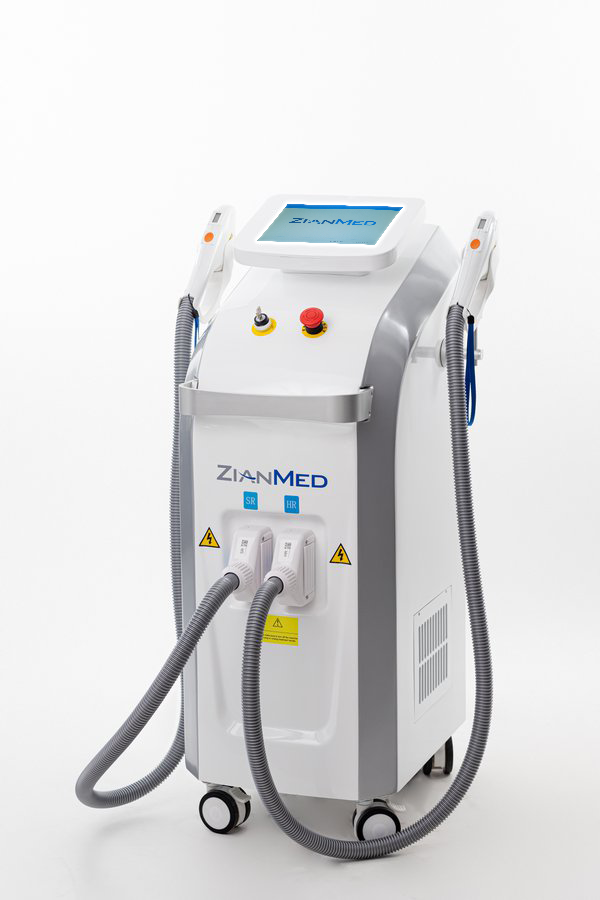
Where the Allegra IPL Fits Into Combination Treatment Planning
The ZianMed Allegra IPL gives aesthetic practices an IPL platform that can be incorporated into treatment plans for common pigmentary, vascular, photorejuvenation, and other appropriate light-based aesthetic applications.
For a patient with photoaged skin, a provider might use Allegra IPL as part of a plan focused on concerns such as:
- Brown discoloration
- Sun-related pigmentation
- Facial redness
- Visible superficial vascular concerns
- Uneven complexion
- General photorejuvenation
Rather than viewing IPL as a replacement for resurfacing, providers can view it as one component of a broader skin-management strategy.
A patient whose primary concern is pigmentation may initially need an IPL-focused treatment series.
Another patient may require resurfacing first.
A third patient may benefit from a carefully planned series incorporating both modalities over time.
The key is patient-specific treatment planning rather than a one procedure fits all approach.
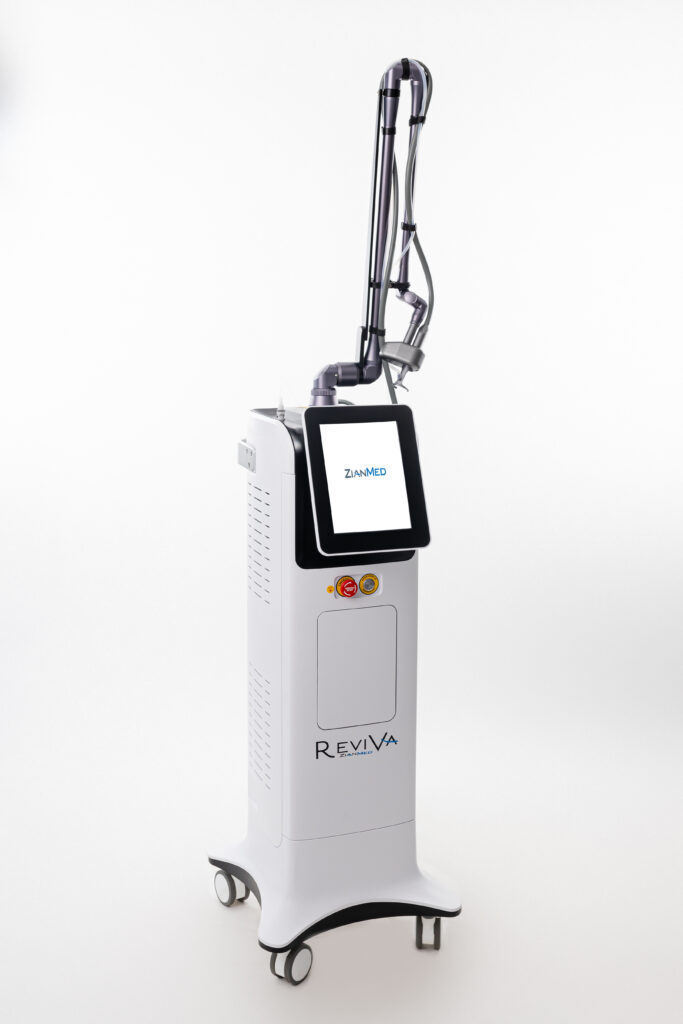
Where the Reviva CO₂ Laser Fits Into the Treatment Plan
The ZianMed Reviva CO₂ laser gives providers a fractional CO₂ resurfacing option for patients who require treatment beyond superficial color correction.
Fractional CO₂ technology allows providers to address concerns such as:
- Skin texture
- Fine lines and wrinkles
- Acne scarring
- Enlarged-appearing pores
- Photodamage
- Overall resurfacing and remodeling
This makes Reviva CO₂ a natural complement to IPL within an aesthetic practice. One technology can help address the pigmentary and vascular appearance of the skin, while the other can be incorporated when resurfacing and structural remodeling are desired.
Do IPL and CO₂ Have to Be Performed During the Same Appointment?
No.
“Combination treatment” does not necessarily mean performing both procedures immediately one after another.
Combination therapy can mean incorporating multiple technologies into an overall treatment plan.
The appropriate sequence and interval depend on factors including:
- Patient skin type
- Treatment indication
- Degree of photodamage
- Previous treatments
- Treatment intensity
- Healing response
- Pigmentation risk
- Medical history
- Provider assessment
Providers should follow the applicable device instructions for use, established clinical protocols, patient-selection criteria, and appropriate post-treatment recovery periods.
In some patients, a staged approach may make more sense—for example, addressing certain pigmentary or vascular concerns and then incorporating fractional resurfacing at another point in the treatment program.
The objective is not simply to perform more treatments. The objective is to match the correct technology to each component of the patient’s concern.
Combination Treatments Can Also Improve the Patient Consultation
Having both IPL and fractional CO₂ technology available can change the conversation providers have with patients.
Instead of saying:
“This is the laser treatment we offer.”
A provider can evaluate what is actually creating the patient’s aged appearance:
Is it pigmentation?
Is it redness?
Is it texture?
Is it scarring?
Is it wrinkles?
Or is it a combination of several concerns?
From there, the provider can build a treatment plan around the patient’s goals.
That ability to customize care can help practices move from selling individual procedures toward providing comprehensive skin rejuvenation programs.
IPL and CO₂ Can Serve Different Roles Throughout the Year
Combination technology also gives practices flexibility when building long-term skin-maintenance programs.
A patient may undergo a more significant resurfacing procedure at one point in the year and then use other treatments as part of an ongoing skin-maintenance plan.
IPL treatments may be incorporated when appropriate to address recurring or persistent pigmentation and vascular concerns, while fractional resurfacing can be scheduled when the patient’s goals call for more meaningful improvement in texture or remodeling.
Treatment timing must always account for sun exposure, skin type, treatment intensity and individual clinical considerations.
Allegra IPL + Reviva CO₂: Expanding the Treatment Menu
For dermatology offices, medical spas, plastic surgery practices and other qualified aesthetic providers, offering both IPL and fractional CO₂ technology can substantially expand the types of skin concerns that can be addressed within one practice.
The Allegra IPL and Reviva CO₂ platforms provide two distinctly different technologies:
Allegra IPL
Light-based treatment for appropriately selected pigmentary, vascular and photorejuvenation applications.
Reviva CO₂
Fractional CO₂ resurfacing for texture, wrinkles, scarring, photoaging and skin remodeling applications.
Their value together comes from their differences.
A provider does not necessarily need two technologies that accomplish exactly the same thing. Having technologies that address different components of skin aging makes it possible to develop more individualized treatment programs.
Access IPL and CO₂ Technology Through ZianMed’s National Aesthetic Laser Rental Program
Adding multiple technologies to a practice traditionally required significant capital investment.
ZianMed’s national aesthetic laser rental program, available throughout the continental United States, provides qualified practices another way to incorporate advanced aesthetic technology into their treatment menu.
Providers can explore rental options for technologies such as Allegra IPL and Reviva CO₂ while evaluating treatment demand, patient response and potential return on investment within their own practice.
For practices looking to expand beyond a single treatment modality, aesthetic equipment rental can provide an opportunity to introduce complementary services without approaching every technology acquisition as a traditional large equipment purchase.
This can be especially valuable for practices interested in developing comprehensive IPL photofacial, skin resurfacing, acne scar, pigmentation, vascular and skin rejuvenation treatment programs.
The Takeaway: Treat the Patient’s Skin, Not Just One Concern
The benefit of combining IPL and fractional CO₂ treatments comes down to a simple principle:
Different signs of skin aging respond to different technologies.
IPL is particularly useful for targeting visible pigment and vascular irregularities.
Fractional CO₂ resurfacing can provide a more significant approach to texture, wrinkles, scars and collagen remodeling.
For appropriately selected patients, incorporating both into a carefully designed treatment plan allows providers to address more of the features that contribute to aged or photodamaged skin.
Rather than asking whether IPL or CO₂ is better, the more useful question may be:
What does this patient’s skin need, and which technology is best suited to each concern?
For aesthetic practices, having access to both technologies can create opportunities for more customized treatment planning, broader treatment menus and long-term patient skin-management programs.
Clinical References
- Sales AFS, et al. Intense Pulsed Light on skin rejuvenation: a systematic review. Archives of Dermatological Research. 2022;314(9):823-838. DOI: 10.1007/s00403-021-02283-2.
- Babilas P, Schreml S, Szeimies RM, Landthaler M. Intense pulsed light (IPL): a review. Lasers in Surgery and Medicine. 2010;42(2):93-104. DOI: 10.1002/lsm.20877.
- Wat H, Wu DC, Rao J, Goldman MP. Application of intense pulsed light in the treatment of dermatologic disease: a systematic review. Dermatologic Surgery. 2014;40(4):359-377. DOI: 10.1111/dsu.12424.
- Tierney EP, Eisen RF, Hanke CW. Fractionated CO₂ laser skin rejuvenation. Dermatologic Therapy. 2011;24(1):41-53. DOI: 10.1111/j.1529-8019.2010.01377.x.
- Tierney EP, Hanke CW. Fractionated carbon dioxide laser treatment of photoaging: prospective study in 45 patients and review of the literature. Dermatologic Surgery. 2011;37(9):1279-1290. DOI: 10.1111/j.1524-4725.2011.02082.x.
- Nisticò SP, et al. Combination of Fractional CO₂ Laser and Rhodamine-Intense Pulsed Light in Facial Rejuvenation: A Randomized Controlled Trial. Photobiomodulation, Photomedicine, and Laser Surgery. 2021;39(2):113-117. DOI: 10.1089/photob.2020.4876.
- Ablative fractional carbon dioxide laser combined with intense pulsed light for the treatment of photoaging skin in Chinese population: a split-face study. Published clinical study indexed in PubMed. PMID: 29504972.
Professional Use Notice: This information is intended for professional education and does not establish a universal treatment protocol. Treatment selection, parameters, sequencing and timing should be determined by appropriately trained providers based on patient assessment, applicable labeling, device instructions for use, and relevant state and federal requirements.